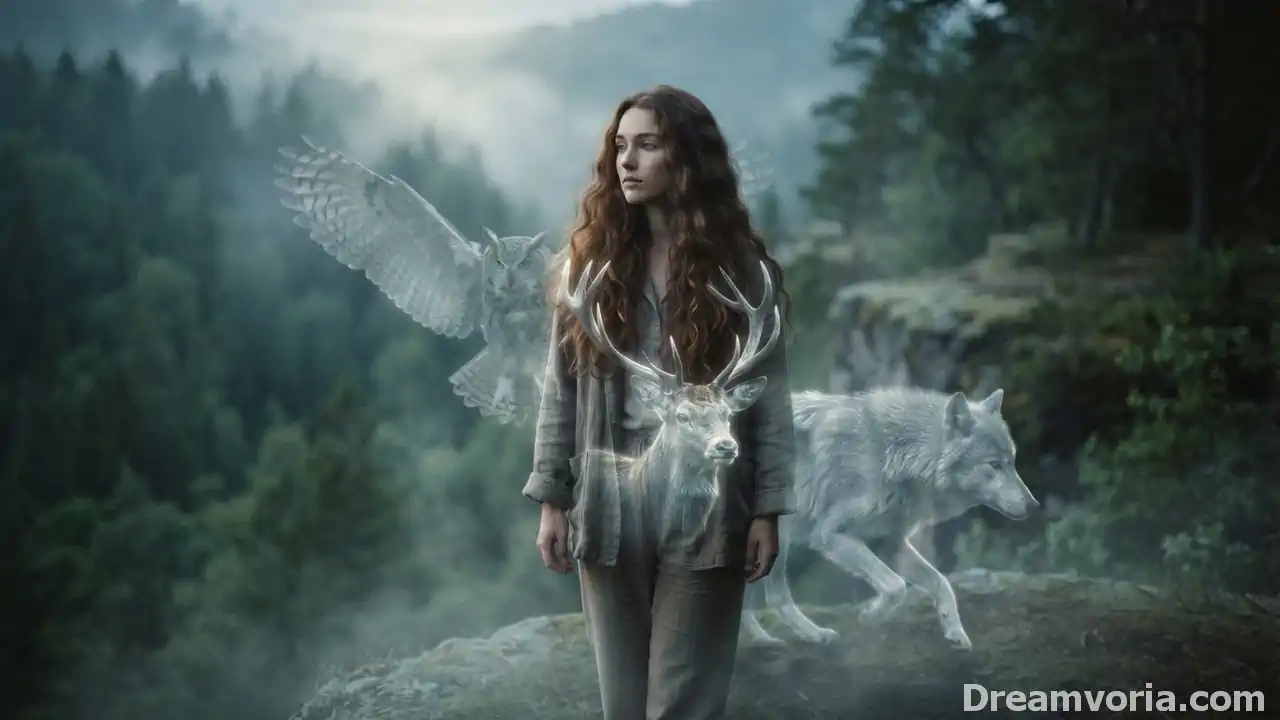
There’s a particular kind of dream that tends to stay with people long after they wake up — the one where you’re no longer entirely yourself. Maybe your hands curl into paws mid-sentence, or you feel fur rippling across your arms, or you look down at a river and see a wolf’s reflection staring back instead of your own face. A shapeshifting animal dream like this rarely feels like a throwaway scene from the night. It feels like something is trying to get your attention, and that instinct is usually worth listening to.
I’ve spent years reading and collecting dream reports, talking with people about the images that visit them at night, and comparing what shows up again and again across different cultures and personal histories. Shapeshifting dreams are one of those recurring patterns that show up in nearly every tradition of dream reading, from Indigenous storytelling to modern sleep psychology, and for good reason — becoming an animal in a dream touches something very old in the human imagination.
This piece walks through the different angles worth considering if you’ve had one of these dreams: what it might mean in a general sense, the more hopeful readings, the ones that ask you to slow down and pay attention, and how folklore and psychology each approach the same strange experience differently.
What Does It Mean to Dream About Turning Into an Animal?
At its core, a dream where you shift into an animal — or watch someone else transform in front of you — tends to point toward a part of yourself that doesn’t get much daylight in your waking life. Animals in dreams often carry instinct, appetite, freedom, and a kind of honesty that human social life doesn’t always allow for. When your dreaming mind reaches for an animal body instead of your own, it may be reaching for a quality that animal represents: the patience of a deer, the loyalty of a wolf, the watchfulness of an owl, the untamed confidence of a big cat.
It helps to think of the transformation itself as the message, not just the animal. Shifting from human to animal often shows up during periods when someone feels caught between two ways of being — the version of themselves that follows the rules, and the version that wants to break free of them. The dream doesn’t necessarily mean you should abandon your responsibilities. More often it’s asking whether there’s room in your life for the instinctive, less polished part of who you are.
Why Do These Transformation Dreams Happen in the First Place?
Shapeshifting dreams tend to cluster around certain life stages rather than appearing at random. People report them during transitions — starting a new job, ending a relationship, moving somewhere unfamiliar, becoming a parent, or simply outgrowing an old version of themselves. Transformation, at its most basic level, is what change looks like when the mind pictures it. The body morphing into something else is a fairly direct symbol for identity in motion.
There’s also a simpler explanation worth naming honestly: animals are deeply embedded in how humans process the world, going back further than language itself. Long before people told stories with words, they told them with animal figures — on cave walls, in myth, in ritual. The dreaming brain still reaches for that same old vocabulary. So when a shapeshifting dream shows up, it isn’t always tied to a single event. Sometimes it’s your mind returning to one of its oldest and most natural ways of representing change.
Positive Ways to Read a Shapeshifting Animal Dream
Many people wake from these dreams unsettled, but a good number of the possible readings are actually encouraging. One common interpretation is that the dream reflects a growing sense of personal power. Becoming an animal — especially one known for strength, speed, or sharp senses — can mirror a stage in life where you’re starting to trust your own instincts more, rely less on others’ approval, and move through the world with a bit more confidence.
Another gentler reading involves freedom. Animals aren’t burdened with the same social expectations people are, and a dream where you slip into an animal form can feel almost like relief. If the dream carried a sense of ease or even joy while you were transforming, it may be reflecting a wish — or an early sign — that you’re finding permission to live a little more freely, without over-explaining yourself or shrinking to fit someone else’s comfort.
Shapeshifting into an animal known for its senses, like an owl or a fox, can also point toward sharpened intuition. Some dreamers describe these dreams arriving right before they make a decision that turns out to be the right one, as though some part of them already knew the answer before their waking mind caught up.
When a Shapeshifting Dream Might Be Worth Paying Closer Attention To
Not every interpretation needs to be comforting to be useful. Some shapeshifting dreams carry a heavier tone — the transformation feels forced, painful, or frightening, or you wake up with a lingering sense of dread rather than wonder. These versions are often worth sitting with rather than brushing off.
A transformation that feels involuntary or violent may reflect a period where you feel like you’re losing control over your own choices — perhaps in a job, a relationship, or a family situation where you feel pressure to become someone you don’t recognize. If the animal you turn into feels threatening or predatory, and the dream leaves you afraid of your own reflection, it can point toward guilt or discomfort about a part of yourself you’ve been suppressing, like anger, jealousy, or desire you’ve judged as unacceptable.
It’s also worth paying attention if the shift never completes — you’re stuck halfway between human and animal, unable to fully become either one. That in-between state often shows up during genuine periods of indecision, when someone is torn between two identities, two paths, or two versions of a relationship, and hasn’t yet found their footing in either.
None of these readings are meant as a diagnosis. They’re simply patterns that tend to show up when people describe dreams with this particular flavor of unease.
The Psychological Lens: What Modern Dream Research Suggests
From a psychological standpoint, shapeshifting dreams are often discussed in terms of the parts of ourselves we don’t fully integrate into daily life. Carl Jung wrote extensively about animal figures appearing as symbols of instinct and the unconscious — the parts of the psyche that operate outside logic and social conditioning. A dream where a person becomes an animal can be read as the mind briefly giving voice to that instinctive layer, letting it take the wheel for a scene or two.
Sleep researchers have also noted that transformation dreams tend to increase during periods of heightened emotional processing — stressful weeks, major decisions, grief, or excitement about something new. The brain, while consolidating memory and emotion during REM sleep, seems to favor symbolic, exaggerated imagery over literal replays of the day. Turning into an animal is about as symbolic as dream imagery gets, which may be exactly why the mind reaches for it during emotionally loaded stretches of life.
There’s also a body-based reading worth mentioning. Some dream therapists suggest that animal transformation dreams can reflect a disconnect between how someone thinks and how they physically feel — as if the body is asking to be listened to in a way the waking mind has been ignoring. If you’ve been overriding exhaustion, hunger, or physical stress lately, a dream where your body suddenly becomes something wilder and more instinct-driven might simply be your nervous system asking for a different kind of attention.
What Folklore and Tradition Say About Becoming an Animal in a Dream
Long before psychology had language for the unconscious, cultures around the world had their own frameworks for shapeshifting dreams, and many of them treated the experience as meaningful rather than random. In several Indigenous traditions across North America, dreaming of transforming into an animal — particularly a wolf, bear, eagle, or deer — was understood as a sign of a spiritual connection to that animal as a guide or protector, sometimes described as a kind of totem relationship that reveals itself through dreams rather than through choice.
In parts of European folklore, shapeshifting into a wolf carried a more cautionary weight, tied to old stories about losing control or being overtaken by base instinct — the root of werewolf legends themselves. Meanwhile, in various Asian traditions, fox spirits and bird transformations in dreams were often associated with cunning, transition, or a message arriving from outside the ordinary world.
What’s interesting is how consistently these older interpretive systems agree on one point, even when they disagree on the details: transformation in a dream is rarely treated as meaningless. Nearly every tradition treats it as a message about identity, power, or a threshold the dreamer is standing at, whether that threshold is spiritual, emotional, or practical.
Common Variations of the Shapeshifting Dream and What Sets Them Apart
Not every shapeshifting dream follows the same shape. Some of the most frequently reported versions include watching someone else transform rather than transforming yourself, which often points toward how you perceive a person in your life — as if some hidden trait of theirs has finally become visible to you. Others describe transforming back and forth repeatedly between human and animal form throughout the dream, a pattern that tends to show up during periods of real ambivalence, when someone is going back and forth on a decision in waking life too.
There’s also the dream where you’re fully aware you’re an animal and can think and reason as your human self while inhabiting the animal body. Dreamers often describe this version as strangely calm rather than frightening, and it tends to reflect a moment where someone feels like they finally understand themselves clearly, even if the outside world still sees them differently.
Group transformation dreams, where you and others shift together — sometimes into a pack or a flock — often surface during times connected to community, belonging, or shared identity, such as starting a new social circle or reconnecting with family.
Turning Into a Specific Animal: Wolf, Bird, Deer, and Beyond
The particular animal in a shapeshifting dream tends to color the interpretation quite a bit, since each carries its own long-standing associations. Turning into a wolf often relates to independence, loyalty, or a wish to move through life with sharper instincts and less second-guessing. Becoming a bird — especially one capable of strong flight, like an owl or hawk — frequently points toward a desire for perspective, freedom from a situation that feels confining, or a wish to rise above a conflict rather than get pulled into it.
A deer transformation tends to carry gentler symbolism, often tied to sensitivity, vigilance, or a need for safety after a period of feeling exposed. Big cats, like lions or panthers, commonly show up during moments connected to confidence, ambition, or reclaiming a sense of personal authority. Smaller, quicker animals like foxes or rabbits often relate to cleverness, adaptability, or, in some cases, a wish to become harder to pin down or predict.
None of these readings are fixed rules — the feeling you had during the dream matters just as much as the species itself, sometimes more.
Who Tends to Have These Dreams, and What They Might Mean for Different People
Shapeshifting animal dreams show up across every age group, but certain life stages seem to bring them on more often. Younger adults navigating identity — career changes, new relationships, moving away from home for the first time — frequently report them during those years of active self-definition. Parents, particularly new ones, sometimes describe animal transformation dreams around the exhaustion and instinct-driven intensity of caring for a newborn, when logical thought gives way to something more primal.
People going through grief or major loss also report these dreams more than average, often experiencing gentler animals like deer or birds rather than predators, which may reflect a need for protection or a softer way of processing pain. And for people in the middle of a creative or spiritual pursuit, shapeshifting dreams are sometimes described almost like visitations — a sense that the animal arrived with something specific to communicate, rather than appearing as a random image.
How to Sit With Your Own Shapeshifting Dream
If a dream like this has stayed with you, it can help to spend a few quiet minutes recalling the details rather than rushing to a single meaning. What animal did you become, and how did it feel in that body — powerful, frightened, calm, out of control? Did the transformation feel wanted or forced? Was anyone else present, and how did they react to seeing you change?
The answers to these questions usually matter more than any general symbol list, because your own emotional response inside the dream is the clearest clue to what it’s reflecting in your waking life. A dream is rarely a message with one correct translation. It’s closer to a mirror held up at an unusual angle, and the shapeshifting animal in it is simply the shape your mind chose to show you something you already sense, even if you haven’t quite named it yet.
Disclaimer: Dream symbolism is a matter of interpretation, tradition, and personal reflection rather than fixed fact. The meanings shared here are possible readings, not definitive explanations, and are not a substitute for professional psychological or medical guidance. If a dream is connected to ongoing distress, anxiety, or sleep disturbances, consider speaking with a qualified therapist or healthcare provider.
Still thinking about that dream? Share the details in the comments below, or explore more animal dream meanings on Dreamvoria to see what other symbols might be trying to reach you.